


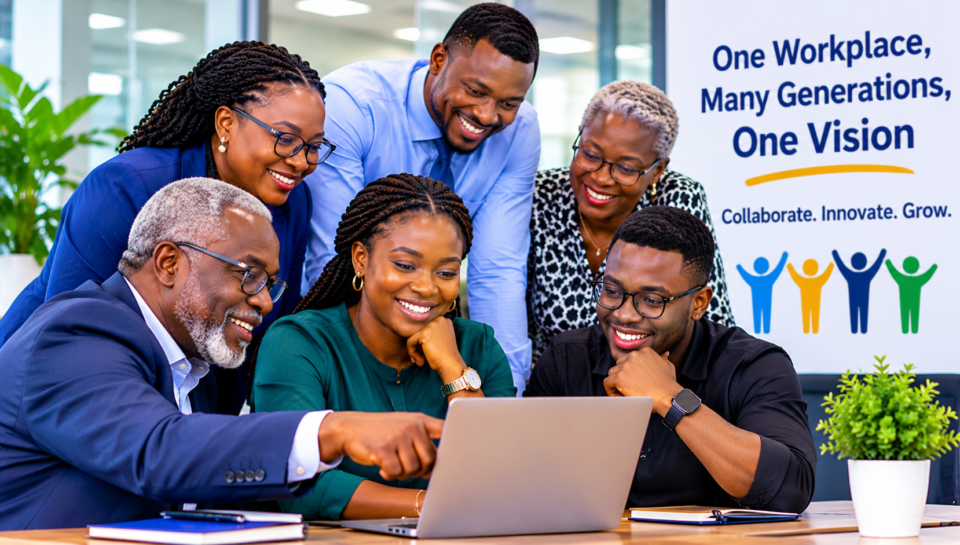
ONE WORKPLACE, MANY GENERATIONS, ONE VISION
How embracing generational differences can unlock collaboration, innovation and organisational success.
Today’s workplace brings together people whose professional experiences, values, communication styles and expectations have been shaped by different generations. From Baby Boomers and Generation X to Millennials and Generation Z, popularly known as ‘Gen Z’, employees increasingly work side by side, bringing distinct perspectives to shared organisational goals.
While this diversity can sometimes create differences in communication, approaches to technology, leadership expectations and work-life priorities, it also presents an important opportunity for organisations to build stronger, more innovative and productive teams.
The real challenge, therefore, is not how to eliminate generational differences but how to manage them effectively and turn them into a competitive advantage.
Understanding the generational mix
A multigenerational workforce is more than a combination of employees of different ages. It represents a blend of experiences, knowledge, skills and perspectives that can enrich organisational performance.
Baby Boomers, for instance, are often associated with extensive institutional knowledge, professional experience and established workplace practices. Generation X brings adaptability, independence and practical problem-solving skills. Millennials have contributed significantly to collaborative working, innovation and digital adoption, while Gen Z brings fresh perspectives, technological familiarity and evolving expectations around flexibility, inclusion and career development.
However, these are broad generational tendencies, not fixed personality traits. Individual experiences, education, professional backgrounds and personal values often have a greater influence on workplace behaviour than birth year alone.
The objective of effective management is to recognise individual strengths without allowing generational labels to become stereotypes.
Turning differences into organisational strengths
1. Encourage knowledge sharing and reverse mentoring
2. Build an inclusive communication culture
3. Focus on individual strengths, not generational labels.
4. Promote collaboration through diverse teams
Research supports the business value of this approach. The OECD’s 2020 report, Promoting an Age-Inclusive Workforce, found that companies with a 10% higher share of workers aged 50 and above than the average were 1.1% more productive. The report attributed some of these benefits to the complementary strengths of employees of different ages, including knowledge sharing and experience.
5. Invest in continuous learning and development
The business case for generational inclusion
The benefits of managing a multigenerational workforce extend beyond improved workplace relationships. They include stronger employee engagement, better knowledge retention, innovation, organisational resilience and improved productivity.
The OECD report also highlights that 83% of executives surveyed across 36 OECD countries considered a multigenerational workforce valuable to their organisation’s success and growth. Yet, fewer than 5% of employers had implemented concrete age-inclusive policies. This reveals a significant gap between recognising the value of workforce diversity and putting effective measures in place.
Importantly, organisations must avoid the temptation to manage employees based solely on generational assumptions. A 2024 meta-analysis published in the Journal of Organizational Behavior found few systematic, meaningful differences between generations across several workplace outcomes. This reinforces the importance of understanding employees as individuals rather than relying on stereotypes.
Leading beyond generational boundaries
Ultimately, managing a multigenerational workforce requires leadership that values people, encourages collaboration and recognises the contributions of every employee.
Managers must create an environment where experience is respected, fresh ideas are welcomed, differences are discussed constructively and opportunities for growth are accessible to all. Employees should feel valued not because of their age or years of service, but because of the knowledge, commitment and capabilities they bring to the organisation.
For organisations seeking sustainable growth, the strength of a workforce lies not in having employees who think alike, but in bringing together people who think differently and enabling them to work towards a common purpose.
After all, experience provides perspective, fresh thinking creates possibilities, and collaboration turns both into progress.
The future of work is not a competition between generations; it is a partnership across them. Organisations that understand this will be better positioned to build stronger teams, develop future leaders and achieve lasting organisational success.
Written by: Judy Ahinakwa